
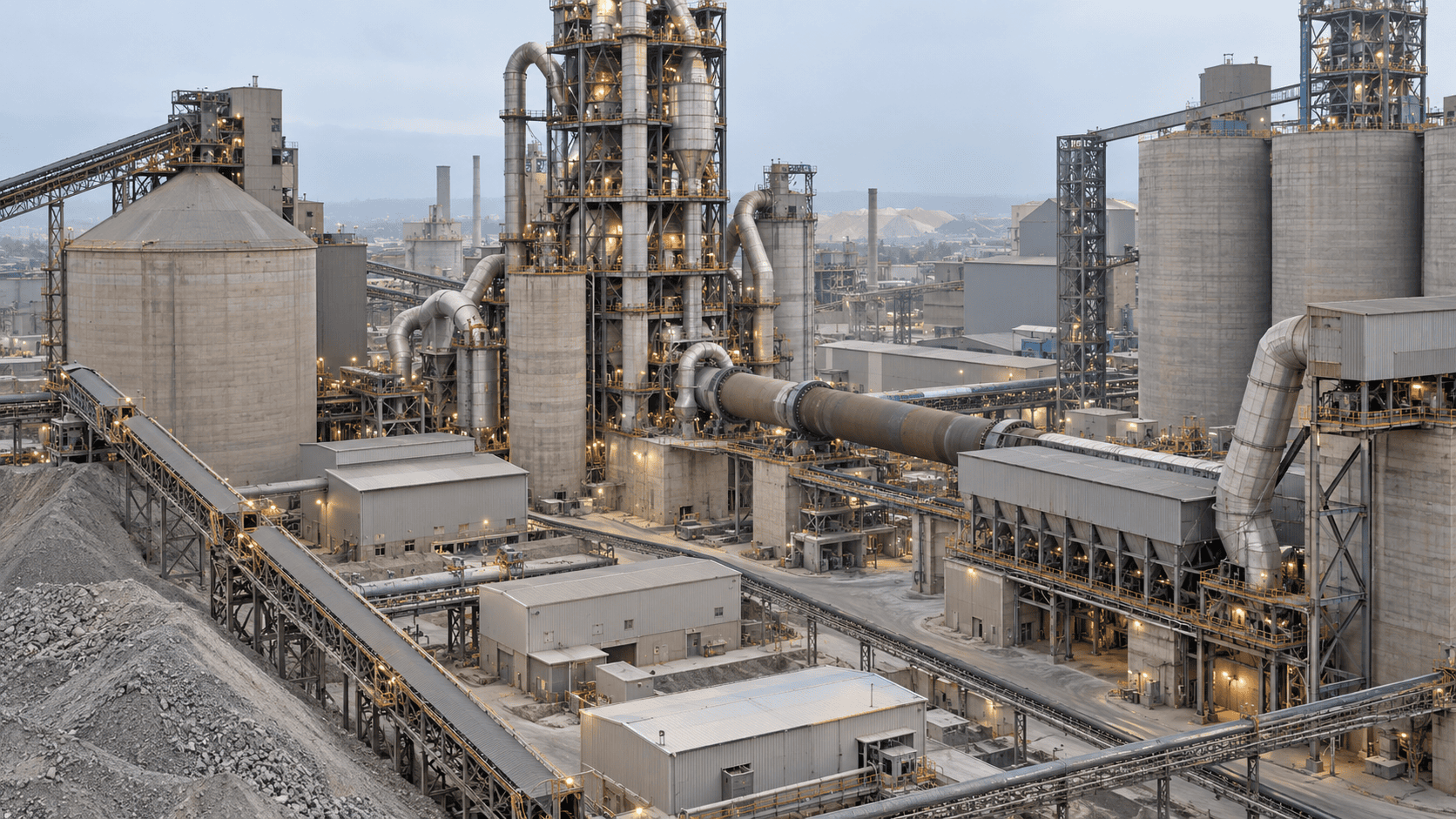
Cement
Cement is an essential material for construction and infrastructure development. However, its production is highly energy-intensive and generates substantial CO₂ emissions from both fuel combustion and chemical reactions involved in clinker manufacturing.
Decarbonizing cement production requires a combination of energy efficiency improvements, alternative fuels, clinker substitution, innovative production technologies, and carbon capture solutions.
Current Production Process
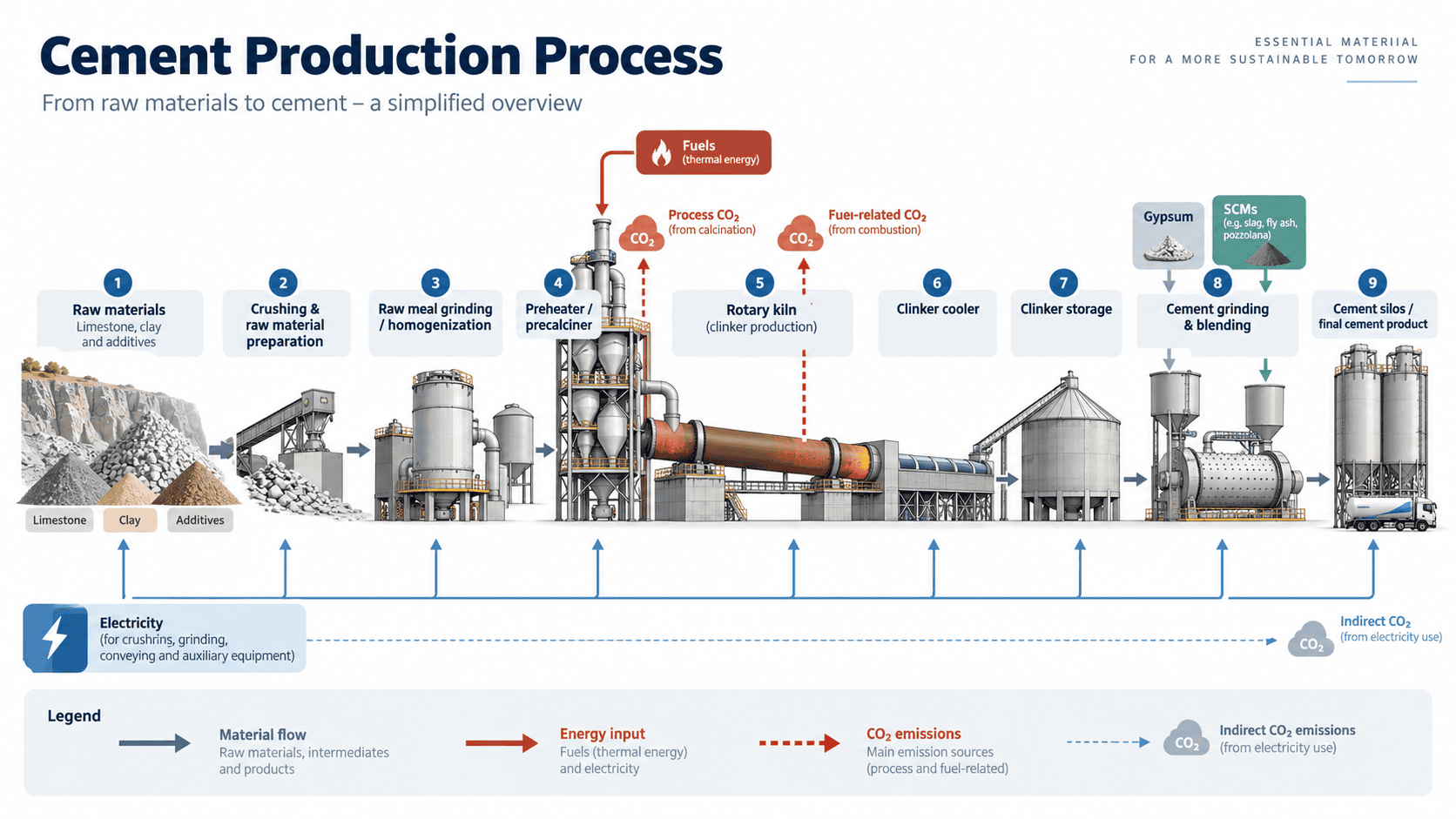
Cement production involves several interconnected stages, from raw material preparation to clinker manufacturing and final cement grinding. Modern cement plants predominantly use dry-process rotary kilns equipped with multi-stage preheaters and precalciners to improve thermal efficiency.
The main production stages include:
- Raw Material Preparation: Limestone, clay, and other raw materials are extracted, crushed, proportioned, and ground to produce a homogeneous raw meal.
- Preheating and Calcination: The raw meal passes through cyclone preheaters and typically a precalciner, where it is heated using kiln exhaust gases. Limestone decomposition releases CO₂ through the calcination reaction (CaCO₃ → CaO + CO₂).
- Clinker Production: The partially calcined material enters a rotary kiln, where temperatures reach approximately 1,450°C. High-temperature reactions form clinker minerals, which provide the binding properties of cement.
- Clinker Cooling: Hot clinker is rapidly cooled, and recovered heat is typically used to preheat combustion air, improving overall thermal efficiency.
- Cement Grinding and Blending: Clinker is ground with gypsum and, depending on the cement type, supplementary cementitious materials (SCMs), such as limestone, granulated blast furnace slag, fly ash, or calcined clay, to produce different cement products.
Energy Consumption and CO₂ Emissions
Cement manufacturing requires substantial thermal energy for clinker production and electricity for crushing, grinding, conveying, and auxiliary equipment.
Direct CO₂ emissions originate primarily from two sources:
- Process emissions: CO₂ released during the calcination of carbonate raw materials.
- Fuel-related emissions: CO₂ generated from combustion of fossil fuels and other carbon-containing fuels used to supply high-temperature process heat.
Indirect emissions are also associated with purchased electricity and upstream activities.
Unlike many other industries, cement production generates substantial process-related CO₂ emissions that cannot be eliminated through fuel substitution or energy efficiency improvements alone.
Emission Reduction Options
Reducing emissions from cement production requires an integrated approach addressing thermal energy demand, raw materials, clinker composition, and process-related CO₂ emissions.
- Energy Efficiency and Process Optimization: Improve kiln and preheater performance, combustion efficiency, process control, waste heat recovery, and electrical efficiency to reduce specific energy consumption.
- Alternative Fuels and Energy Sources: Substitute conventional fossil fuels with suitable lower-carbon alternatives, including sustainably sourced biomass and selected waste-derived fuels. Electrification of high-temperature processes and hydrogen-based solutions may offer longer-term opportunities, subject to technological development and feasibility.
- Clinker Substitution and Low-Carbon Cement: Reduce the clinker-to-cement ratio through increased use of suitable supplementary cementitious materials, including calcined clay, limestone, and other secondary materials, while maintaining required product performance and quality standards.
- Alternative Raw Materials and Circular Solutions: Evaluate the use of alternative raw materials, industrial by-products, and recovered mineral resources to reduce primary material demand and, where technically feasible, process-related emissions.
- Carbon Capture, Utilization and Storage (CCUS): Assess technologies such as post-combustion capture and oxy-fuel combustion to capture CO₂ from cement production. Carbon capture is particularly relevant for addressing residual process emissions that cannot be avoided through conventional reduction measures.
- Integrated Decarbonization Scenarios: Combine technology options and evaluate their impacts on energy demand, fuel requirements, CO₂ emissions, technical feasibility, and potential implementation timelines.
How Decarbtech4in Can Support
At Decarbtech4in, we support the cement industry through engineering-based energy and carbon analysis, process modelling, technology assessment, and decarbonization scenario development.
Our approach helps industrial companies evaluate alternative emission reduction technologies, quantify their potential impacts on energy consumption and CO₂ emissions, and identify technically informed pathways toward lower-carbon cement production.
Explore opportunities to reduce energy consumption and CO₂ emissions in your cement production processes.
Contact us to discuss your technical challenges and decarbonization objectives.