
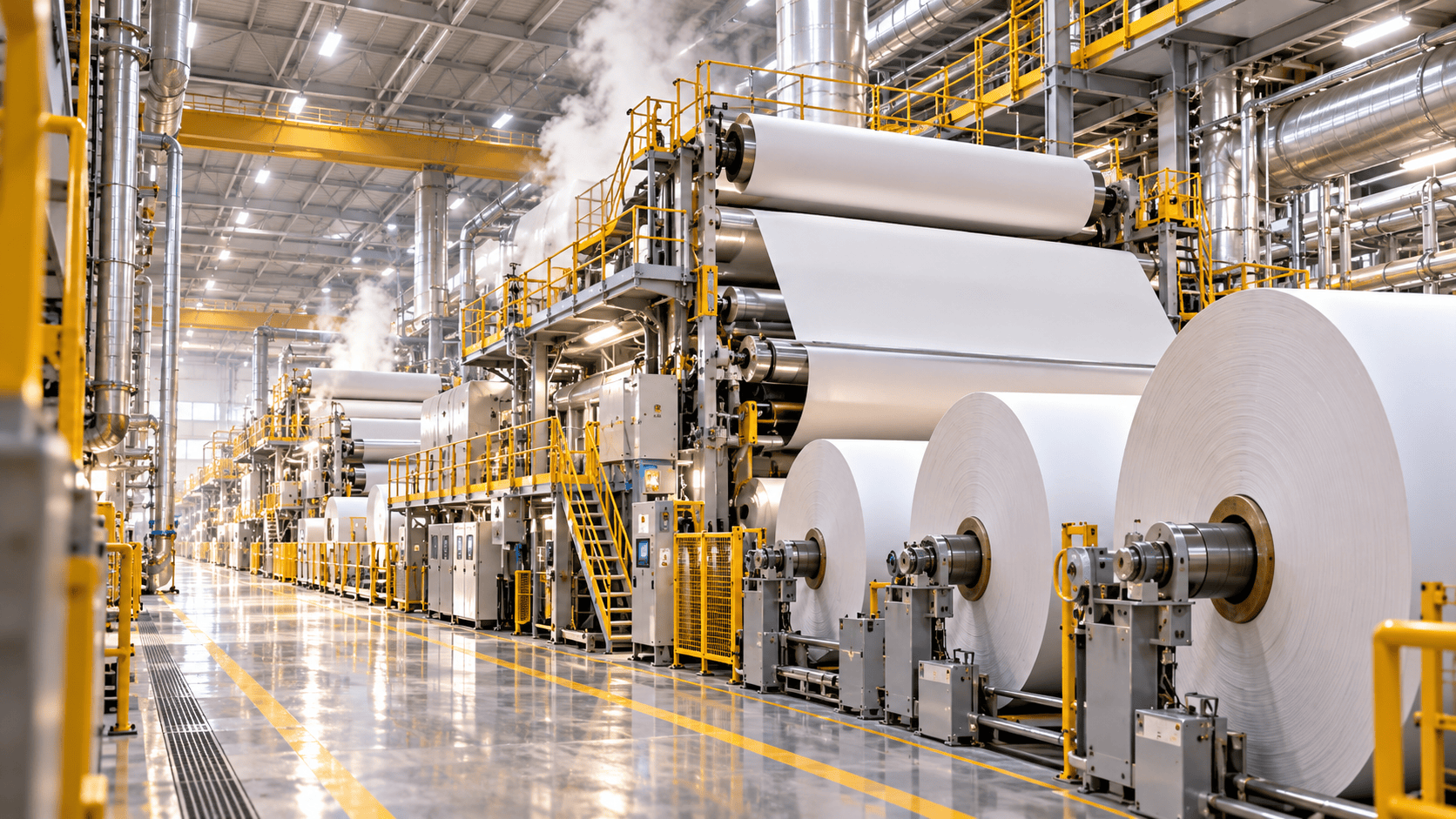
Pulp and Paper
The pulp and paper industry plays an essential role in producing packaging materials, printing and writing paper, tissue products, and other fibre-based materials. However, pulp and paper manufacturing requires substantial thermal and electrical energy, particularly for pulping, chemical recovery, and paper drying.
Decarbonizing the sector requires improvements in energy efficiency, the integration of low-carbon energy sources, optimization of material and resource flows, and the development of innovative production technologies.
Current Production Process
Pulp and paper manufacturing involves several interconnected processes, from raw material preparation and fibre separation to paper forming, drying, and finishing. Production configurations vary depending on the type of pulp, raw materials, and final paper products.
The main production stages include:
- Raw Material Preparation: Wood logs, wood chips, or recovered paper are prepared for pulping. Wood processing typically includes debarking, chipping, and screening, while recovered paper undergoes sorting and preparation.
- Pulping: Cellulose fibres are separated through chemical, mechanical, or recycled-fibre processing. In chemical pulping, particularly the kraft process, wood chips are treated with cooking chemicals in a digester to separate cellulose fibres from lignin and other wood components.
- Pulp Washing and Treatment: The pulp is washed, screened, and cleaned to remove residual chemicals and impurities. Depending on product requirements, bleaching may be applied to achieve the desired brightness and quality.
- Stock Preparation: Pulp is refined and mixed with water and selected additives to obtain the required fibre properties and consistency for paper manufacturing.
- Paper Forming and Pressing: The prepared pulp suspension enters the paper machine, where water is removed through forming and mechanical pressing to produce a continuous paper sheet.
- Drying and Finishing: The paper sheet passes through steam-heated drying cylinders to remove remaining moisture. It is subsequently finished, wound into large rolls, and prepared for further processing or distribution.
In integrated kraft pulp mills, chemical recovery is an additional major operation. Black liquor from the pulping process is concentrated and combusted in a recovery boiler to recover inorganic cooking chemicals and generate steam. Chemical regeneration, including recausticizing and lime reburning, closes the chemical recovery cycle.
Energy Consumption and CO₂ Emissions
Pulp and paper manufacturing requires substantial thermal energy, primarily for pulping, evaporation, and paper drying, while electricity is consumed by mechanical processing, pumping, refining, vacuum systems, and auxiliary equipment.
Integrated chemical pulp mills often generate a significant share of their energy through the combustion of black liquor and other biomass residues, frequently using combined heat and power (CHP) systems.
The main sources of greenhouse gas emissions include:
- Direct fossil fuel emissions: CO₂ generated from fossil fuels used in auxiliary boilers, lime kilns, and other thermal processes.
- Biogenic CO₂ emissions: CO₂ released from the combustion of black liquor, biomass, and other biogenic materials, which requires separate consideration under applicable GHG accounting methodologies.
- Indirect emissions: Emissions associated with purchased electricity, steam, and upstream energy and material supply chains.
Energy demand and emission profiles vary considerably between integrated chemical pulp mills, mechanical pulp mills, recycled-fibre facilities, and standalone paper mills.
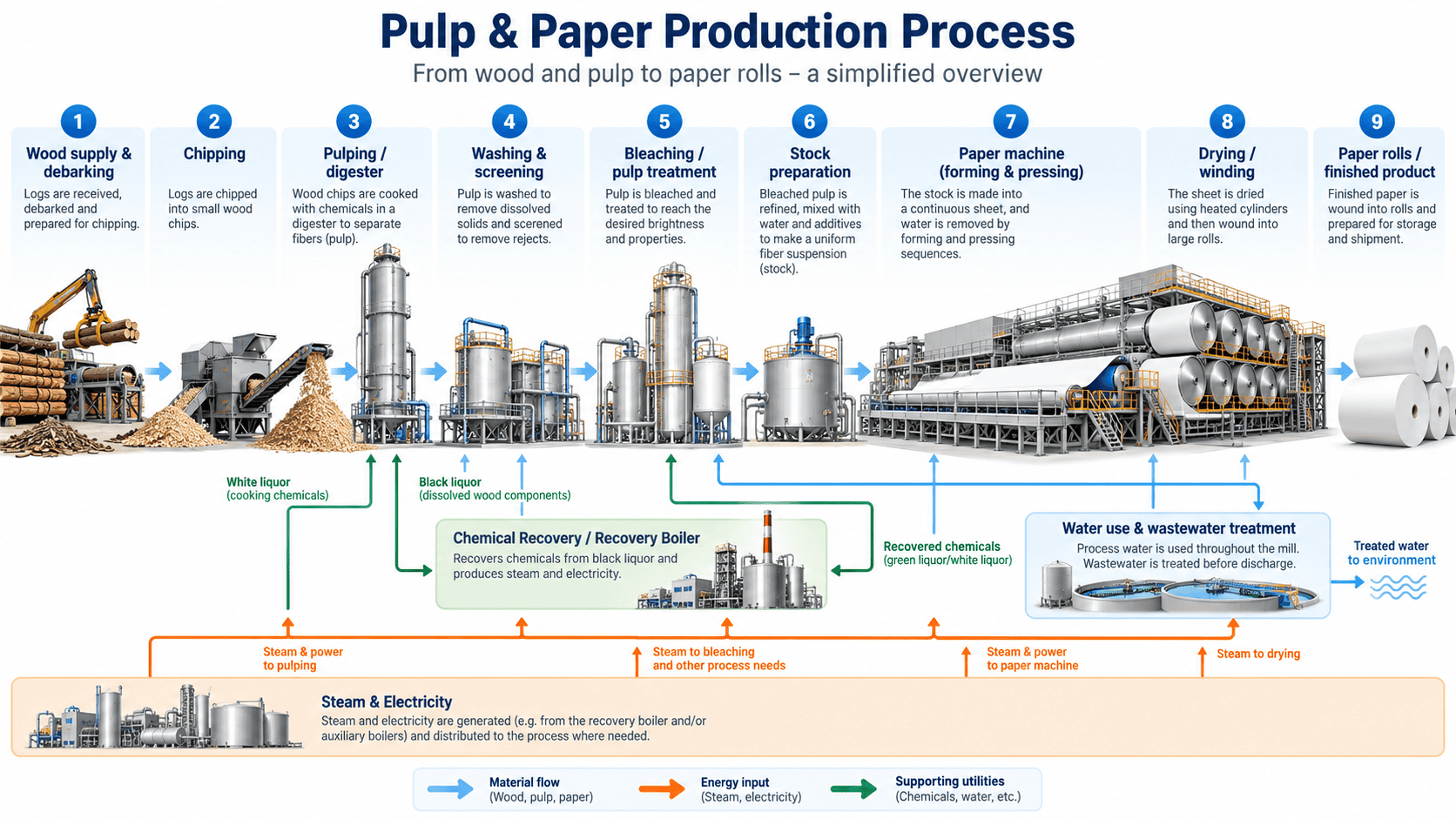
Simplified process flow of an integrated chemical pulp and paper mill. Actual production configurations vary depending on pulping technology, fibre source, and final paper product.
Emission Reduction Options
Industrial decarbonization in the pulp and paper sector requires an integrated approach combining energy efficiency, low-carbon heat supply, process improvements, and resource efficiency measures.
- Energy Efficiency and Process Optimization: Improve the efficiency of pulping, refining, evaporation, pressing, and drying systems. Opportunities include advanced process control, steam system optimization, improved heat integration, and reduced specific energy consumption.
- Waste Heat Recovery and Heat Pumps: Recover and reuse low- and medium-temperature waste heat from drying systems, process water, and other industrial operations. Industrial heat pumps and mechanical vapour recompression can provide opportunities to reduce external heat demand.
- Electrification and Low-Carbon Energy: Evaluate electrified steam generation, renewable electricity integration, and alternative low-carbon heat supply technologies to reduce dependence on fossil fuels.
- Biomass and Chemical Recovery Optimization: Improve the performance of recovery boilers, biomass-based energy systems, and combined heat and power generation while considering fuel availability, operational efficiency, and biogenic carbon flows.
- Circular Economy and Resource Efficiency: Increase the efficient use of recovered fibres, improve fibre recovery and recycling processes, reduce material losses, and optimize water and chemical consumption.
- Innovative Technologies and Carbon Capture: Assess emerging pulping and drying technologies, alternative energy conversion systems, and carbon capture opportunities, particularly at integrated pulp mills with concentrated biogenic CO₂ emission streams.
- Integrated Decarbonization Scenarios: Develop and compare technology pathways to quantify changes in energy demand, fossil fuel consumption, biogenic energy use, and greenhouse gas emissions under different industrial transition scenarios.
How Decarbtech4in Can Support
At Decarbtech4in, we support the pulp and paper industry through engineering-based energy and material flow analysis, greenhouse gas accounting, technology assessment, and decarbonization scenario modelling.
Our approach helps industrial companies identify major energy consumers and emission sources, evaluate efficiency improvements and low-carbon technologies, and quantify their potential impacts on energy consumption, resource use, and GHG emissions.
Explore opportunities to improve energy efficiency and reduce emissions in your pulp and paper production processes.
Contact us to discuss your technical challenges and industrial decarbonization objectives.